

Hisense
This project involved the design of a web-based tool created to support sales representatives during in-store and on-site sales conversations.
The product was designed as a practical aid for vendors to help customers identify the most suitable product configuration based on their needs, while providing real-time pricing feedback during the discussion.
Date
2018
Role
UX/UI Designer - Front-End Developer
Problem
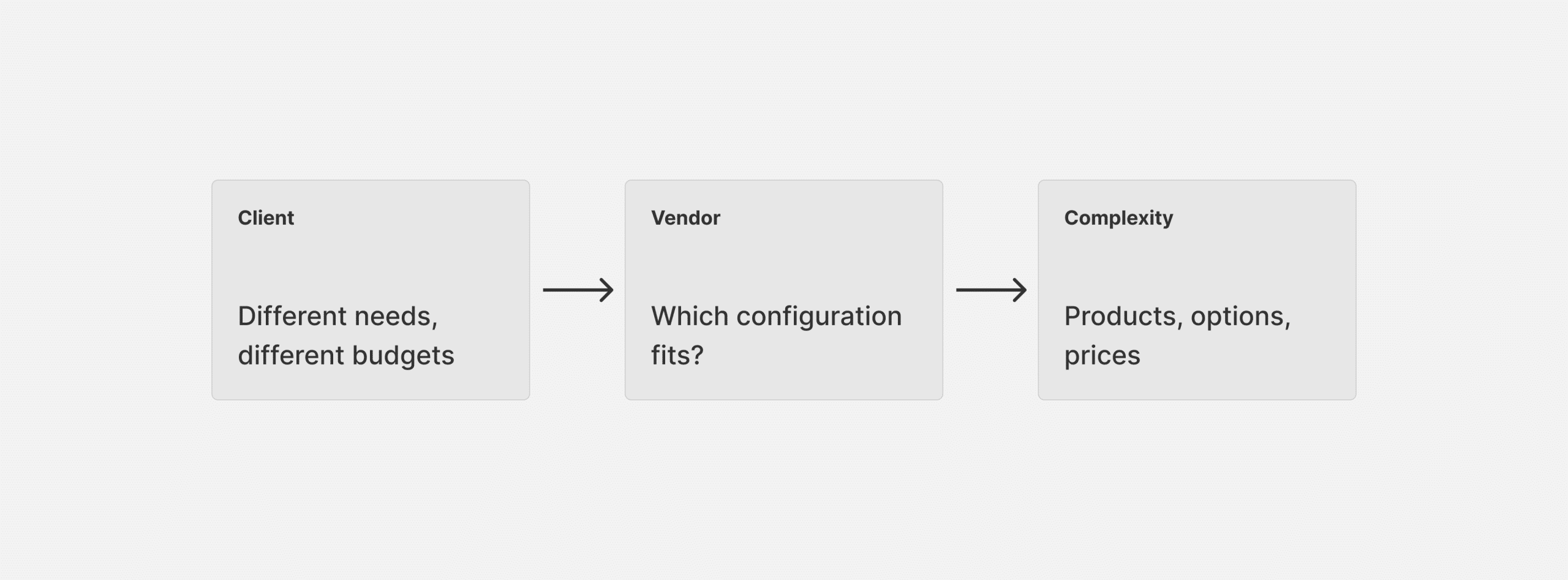
Sales representatives needed a clear and flexible way to present complex product configurations while maintaining a smooth and engaging conversation with customers.
Existing tools were either too technical or not designed to support a narrative sales approach, making it difficult to adapt the presentation to different customer profiles.
Additionally, product configurations directly impacted pricing, requiring real-time feedback to help customers understand the implications of their choices without overwhelming them with information.
Goals
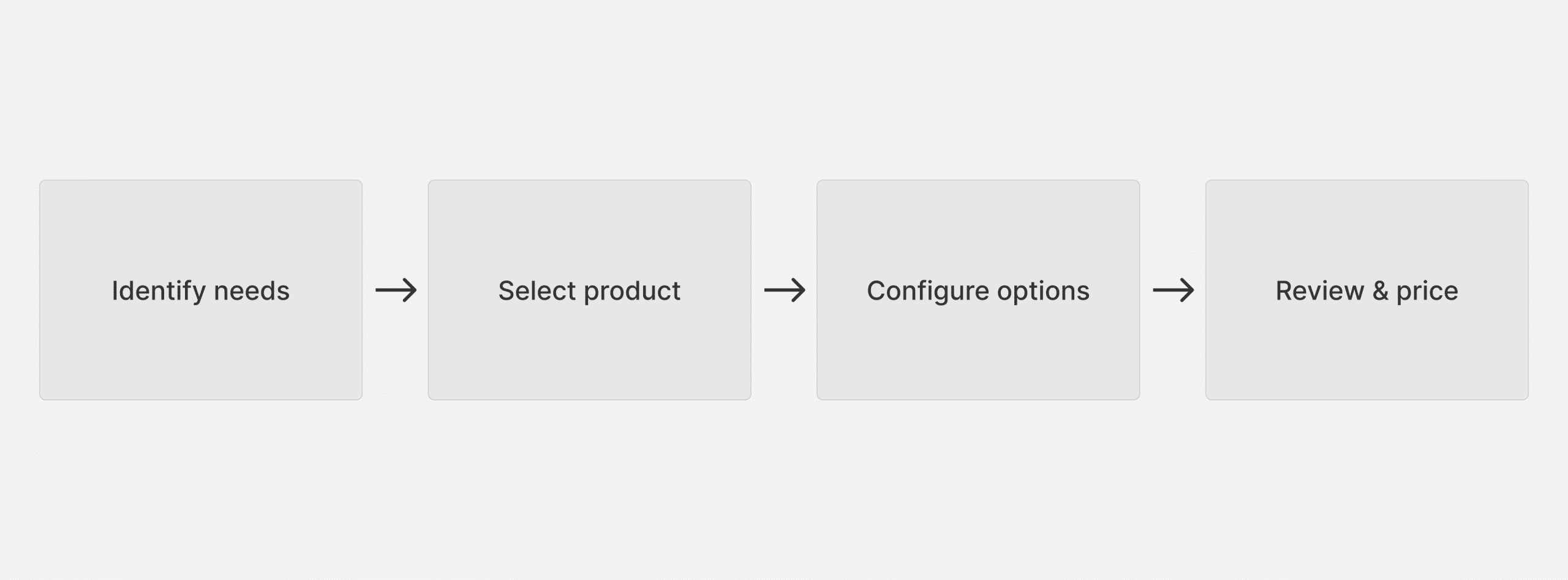
The primary goal was to create a guided experience that would support sales conversations rather than replace them.
The tool needed to help sellers progressively identify customer needs, suggest appropriate products and configurations, and clearly reflect pricing changes as selections evolved.
Another key objective was to design an interface that could be used confidently in live, face-to-face situations, minimizing friction and cognitive load for both sellers and customers.
Constraints
The application had to operate within predefined technical and organizational constraints.
At the time, direct integration with internal ordering systems was not planned, meaning the tool needed to clearly summarize configurations without handling order placement.
The interface also had to accommodate different usage contexts, from retail environments to business-oriented sales meetings, often under time pressure.
Role & Responsibilities
I worked on this project as a UX/UI Designer and Front-End Developer, covering the full lifecycle from experience design to implementation.
My responsibilities included defining the user flows, designing the interface, and developing the front-end to ensure that design decisions were accurately translated into a working product.
This dual role allowed for close alignment between design intent and technical execution.
Process
The experience was structured as a step-by-step wizard, designed to support a natural sales narrative.
Each step focused on a specific aspect of the customer’s needs, progressively narrowing down the most suitable product configuration.
Design iterations focused on clarity, feedback and pacing, ensuring that users could move through the flow confidently while maintaining control over the conversation.
Solution
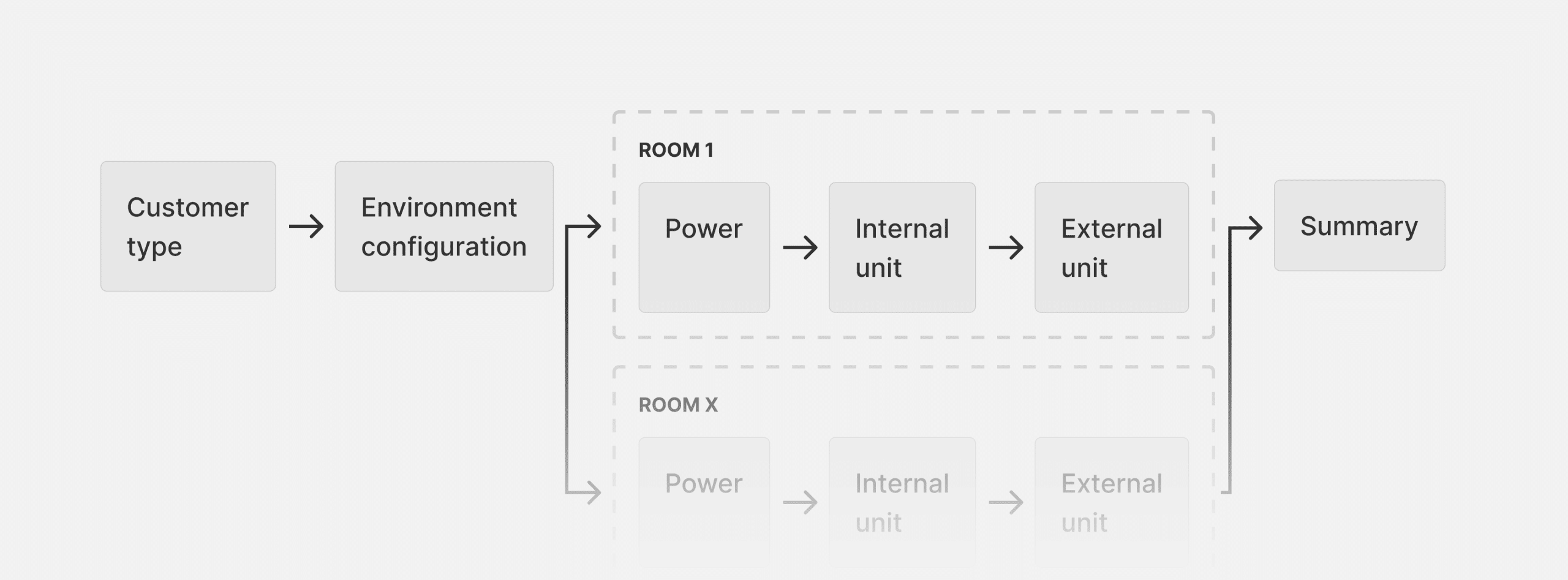
The final solution was a web application that guided sales representatives through product selection using a modular, wizard-based flow.
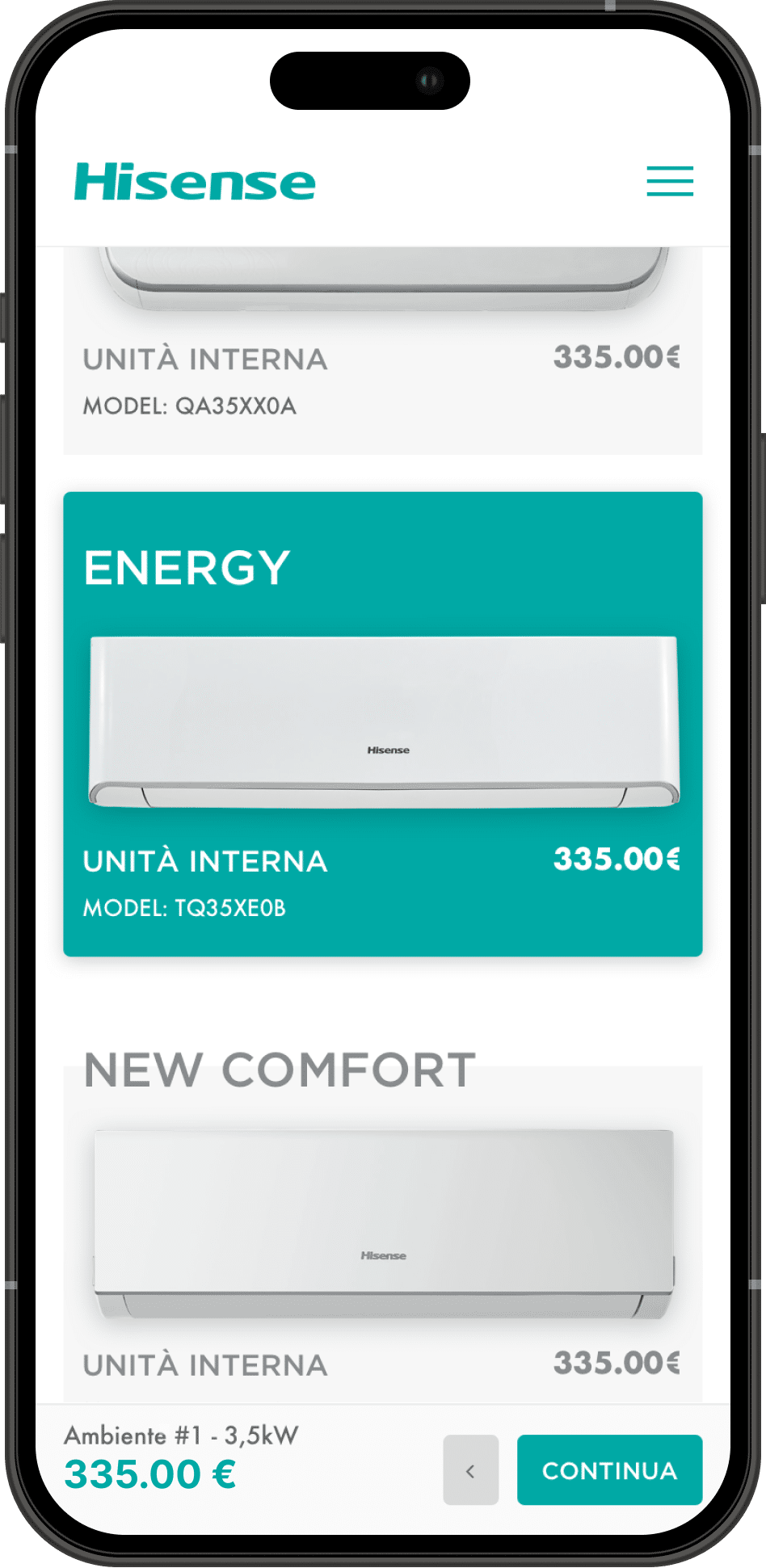
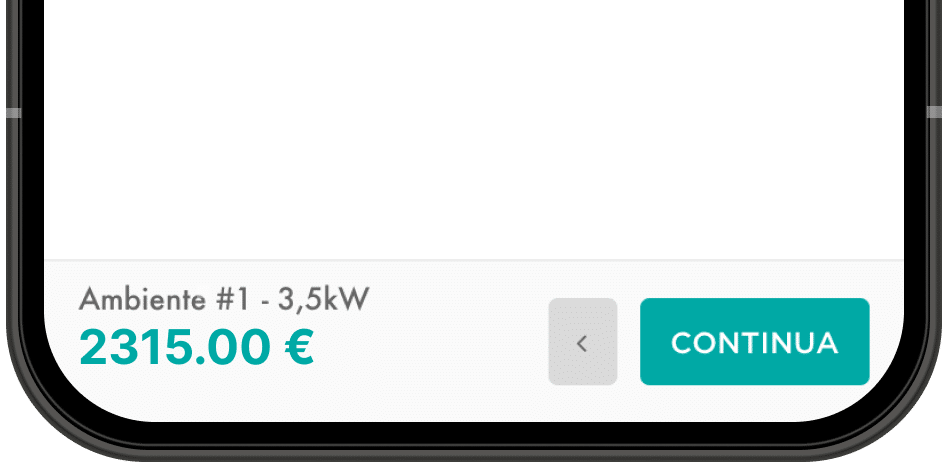
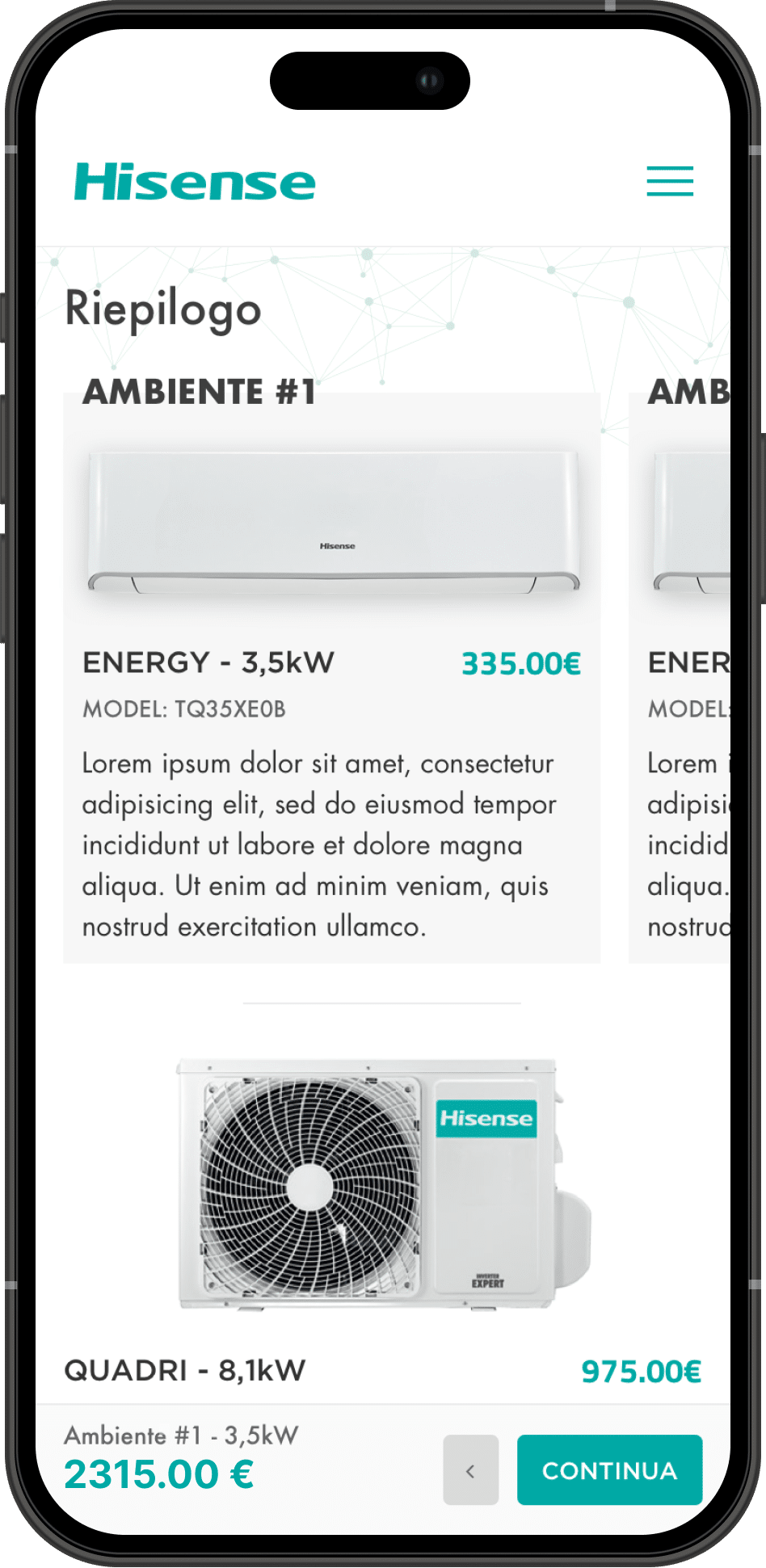
As products and options were selected, pricing updated in real time, allowing sellers to clearly explain trade-offs and value to customers.
At the end of the flow, the tool provided a clear summary of the selected configuration, supporting order placement through existing internal processes.
Results & Learnings
The project demonstrated the value of designing tools that support human interaction rather than automate it entirely.
Structuring the experience around a narrative flow helped sellers maintain engagement while managing complex information.
From a design perspective, the project reinforced the importance of simplicity, real-time feedback and adaptability in sales-oriented digital tools.